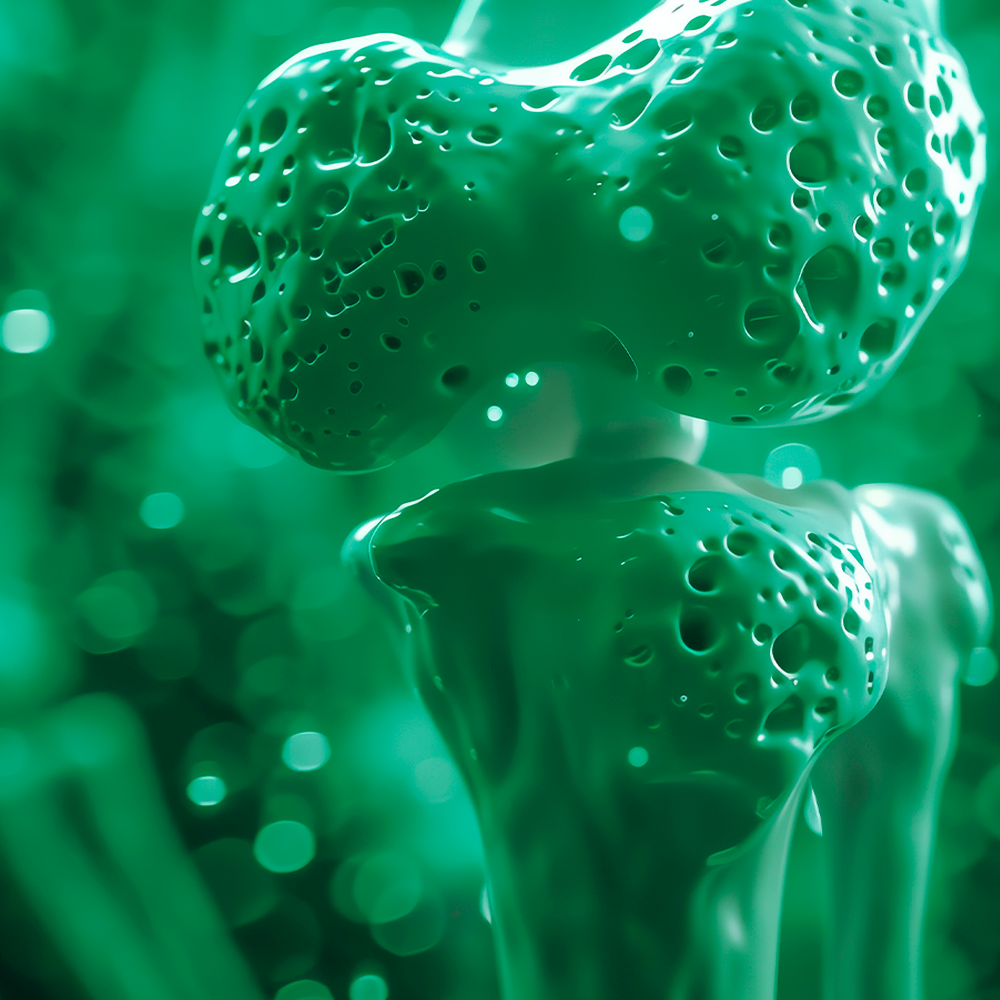
Bones possess a natural ability to heal after fractures, but their regenerative potential is limited. Large-scale injuries, such as extensive skull defects, often fail to heal completely or heal improperly. Current treatments, which primarily focus on delivering growth factors to stimulate angiogenesis and osteogenesis, are insufficient for critical-sized bone defects. In a groundbreaking study published in Nature Communications , researchers from China have developed an innovative solution: an organoid that mimics the ossification center, a key region in bone formation during development. This approach has shown promising results in restoring large bone defects in rats.
Mimicking the Ossification Center
The ossification center plays a crucial role in bone formation during embryonic development. To replicate this process, researchers created a two-module hydrogel system containing microspheres made of mesenchymal stem cells (MSCs). These microspheres were enriched with two key growth factors:
Experiments demonstrated that CGRP and BMP-2 work synergistically, significantly boosting osteogenic differentiation. This was evidenced by:
- CGRP (Calcitonin Gene-Related Peptide): Enhances osteogenic differentiation.
- BMP-2 (Bone Morphogenetic Protein-2): Promotes bone formation.
Experiments demonstrated that CGRP and BMP-2 work synergistically, significantly boosting osteogenic differentiation. This was evidenced by:
- Increased alkaline phosphatase (ALP) activity.
- Higher cell proliferation rates (Ki67).
- Reduced markers of cellular senescence (γH2AX).
3D Printing and Hydrogel Design
The researchers used 3D printing to create spherical "microtissues" containing MSCs, CGRP, and BMP-2. These structures were embedded in a dual-layer hydrogel system:
This design ensured high cell viability and sustained osteogenic activity.
- Inner Layer: A stable hydrogel housing the microspheres.
- Outer Layer: A faster-degrading hydrogel loaded with Substance P to promote early-stage tissue integration.
This design ensured high cell viability and sustained osteogenic activity.
Experimental Setup
To evaluate the therapeutic potential of the organoid, it was implanted into a critical-sized defect in the skulls of rats. Control animals received no treatment or standard care. The researchers monitored bone regeneration over eight weeks.
Results
Results
- After One Month: Control animals showed minimal bone formation at the edges of the defect, while rats with the organoid exhibited nearly complete closure of the defect.
- After Eight Weeks: Control rats still had significant gaps in the skull, whereas the organoid-treated group achieved full tissue regeneration.
Mechanisms of Action
Histological and Transcriptomic Insights
Histological and transcriptomic analyses revealed that the organoid promoted:
• Innervation: Enhanced nerve growth in the damaged area.
• Vascularization: Improved blood vessel formation.
• Ossification: Accelerated bone tissue formation.
Histological and transcriptomic analyses revealed that the organoid promoted:
• Innervation: Enhanced nerve growth in the damaged area.
• Vascularization: Improved blood vessel formation.
• Ossification: Accelerated bone tissue formation.
Cellular Composition
Single-cell RNA sequencing provided deeper insights into the cellular changes induced by the organoid:
These findings highlight the organoid's ability to recreate the cellular environment of developing bone, effectively mimicking the natural healing process.
- An increase in Krt8+ bone stem cells , which are essential for bone regeneration.
- A reduction in Has1+ migrating fibroblasts , indicating a shift toward osteogenic processes.
These findings highlight the organoid's ability to recreate the cellular environment of developing bone, effectively mimicking the natural healing process.
Future Implications and Applications
This study demonstrates the potential of organoids mimicking ossification centers as a powerful tool for treating critical bone defects. Potential applications include:
- Skull Injuries: Restoring large cranial defects.
- Long-Bone Fractures: Accelerating healing in complex fractures.
- Jaw Pathologies: Repairing damage caused by trauma or disease.
Next Steps
While the results are promising, further research is needed to:
· Optimize dosages and delivery methods.
· Test the organoid's efficacy in larger animal models and humans.
· Explore its potential for late-stage interventions.
· Optimize dosages and delivery methods.
· Test the organoid's efficacy in larger animal models and humans.
· Explore its potential for late-stage interventions.
Conclusion: A New Era in Bone Regeneration
The development of organoids that mimic ossification centers represents a significant advancement in regenerative medicine. By enhancing natural bone healing processes, these organoids offer a novel and effective solution for treating large bone defects. As research progresses, they hold the promise of transforming clinical approaches to bone repair and improving patient outcomes.
Publication date: 09.07.2025
Source:
Zhang X. et al. Divide-and-conquer strategy with engineered ossification center organoids for rapid bone healing through developmental cell recruitment. Nat Commun. 2025 Jul 4;16(1):6200. doi: 10.1038/s41467-025-61619-y. PMID: 40615395; PMCID: PMC12227775.
https://www.nature.com/articles/s41467-025-61619-y
Source:
Zhang X. et al. Divide-and-conquer strategy with engineered ossification center organoids for rapid bone healing through developmental cell recruitment. Nat Commun. 2025 Jul 4;16(1):6200. doi: 10.1038/s41467-025-61619-y. PMID: 40615395; PMCID: PMC12227775.
https://www.nature.com/articles/s41467-025-61619-y