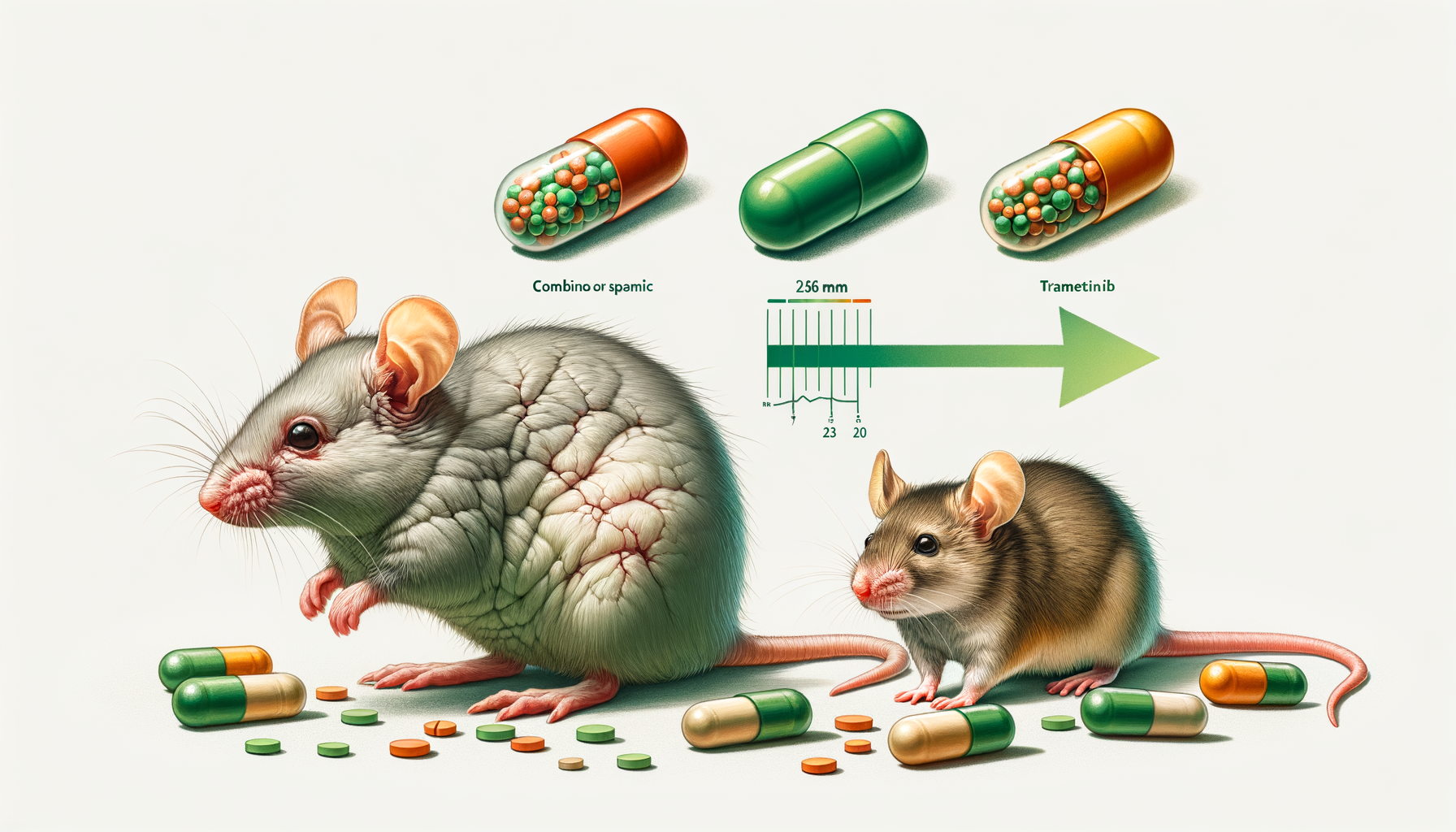
Aging is associated with the gradual decline of bodily functions and an increased risk of age-related diseases. One of the key mechanisms influencing the aging process is the insulin/IGF–mTORC1–Ras signaling pathway. Suppressing the activity of this pathway has been shown to slow aging and extend lifespan in model organisms. In a new study published in Nature Aging, scientists from the Max Planck Institute for Biology of Aging (Germany) demonstrated that a combination of two drugs—rapamycin (an mTOR inhibitor) and trametinib (a MEK inhibitor)—has an additive effect on both the length and quality of life in mice.
Methods and Results
The researchers conducted a long-term experiment on hybrid C3B6F1 mice, dividing them into four groups:
· Control group (standard diet).
· Trametinib group (1.44 mg/kg of feed).
· Rapamycin group (42 mg/kg of feed, administered once per week).
· Combination group (both rapamycin and trametinib).
Methods and Results
The researchers conducted a long-term experiment on hybrid C3B6F1 mice, dividing them into four groups:
· Control group (standard diet).
· Trametinib group (1.44 mg/kg of feed).
· Rapamycin group (42 mg/kg of feed, administered once per week).
· Combination group (both rapamycin and trametinib).
Key Findings:
1. Lifespan Extension:
o Trametinib alone extended median lifespan by 7.2% in females and 10.2% in males
o Rapamycin, as expected, increased lifespan by 17.4% in females and 16.6% in males
o The combination of both drugs produced an additive effect, extending lifespan by 34.9% in females and 27.4% in male
2. Reduction in Age-Related Pathologies:
o Combined therapy reduced the incidence of liver tumors in both sexes and spleen tumors in males
o Mice receiving both drugs showed decreased age-related inflammation in the brain, kidneys, spleen, and muscles, along with reduced levels of pro-inflammatory cytokines (TNF, IL-17a, IL-23r)
3. Improved Brain Metabolism:
Aging in mice is associated with increased glucose uptake in the brain, which correlates with cognitive decline. The combination of rapamycin and trametinib completely blocked this process.
4. Absence of Severe Side Effects:
Unlike rapamycin, which can cause hyperglycemia and liver damage, trametinib did not negatively impact the health of the mice.
1. Lifespan Extension:
o Trametinib alone extended median lifespan by 7.2% in females and 10.2% in males
o Rapamycin, as expected, increased lifespan by 17.4% in females and 16.6% in males
o The combination of both drugs produced an additive effect, extending lifespan by 34.9% in females and 27.4% in male
2. Reduction in Age-Related Pathologies:
o Combined therapy reduced the incidence of liver tumors in both sexes and spleen tumors in males
o Mice receiving both drugs showed decreased age-related inflammation in the brain, kidneys, spleen, and muscles, along with reduced levels of pro-inflammatory cytokines (TNF, IL-17a, IL-23r)
3. Improved Brain Metabolism:
Aging in mice is associated with increased glucose uptake in the brain, which correlates with cognitive decline. The combination of rapamycin and trametinib completely blocked this process.
4. Absence of Severe Side Effects:
Unlike rapamycin, which can cause hyperglycemia and liver damage, trametinib did not negatively impact the health of the mice.
Mechanisms of Action
· Rapamycin inhibits mTORC1 activity, slowing cellular aging and improving immune system function.
· Trametinib suppresses the Ras–MEK–ERK pathway, which plays a role in inflammation and oncogenesis.
· The combination of these drugs enhances the suppression of pro-inflammatory signals and reduces compensatory activation of alternative pathways, explaining the observed additive effect.
· Rapamycin inhibits mTORC1 activity, slowing cellular aging and improving immune system function.
· Trametinib suppresses the Ras–MEK–ERK pathway, which plays a role in inflammation and oncogenesis.
· The combination of these drugs enhances the suppression of pro-inflammatory signals and reduces compensatory activation of alternative pathways, explaining the observed additive effect.
Conclusion
This study demonstrates that trametinib has geroprotective properties, and its combination with rapamycin surpasses monotherapy in terms of effectiveness. These findings open new perspectives for clinical trials of combination therapy in humans, particularly for preventing age-related diseases and extending healthy lifespan.
Future Directions
The researchers note the need for further studies to determine optimal dosages and administration regimens, as well as to investigate the effects of late-onset treatment. Additionally, it is crucial to verify whether the additive effect observed in mice persists in primates and humans.
This study demonstrates that trametinib has geroprotective properties, and its combination with rapamycin surpasses monotherapy in terms of effectiveness. These findings open new perspectives for clinical trials of combination therapy in humans, particularly for preventing age-related diseases and extending healthy lifespan.
Future Directions
The researchers note the need for further studies to determine optimal dosages and administration regimens, as well as to investigate the effects of late-onset treatment. Additionally, it is crucial to verify whether the additive effect observed in mice persists in primates and humans.
Source:
Gkioni L. et al. The geroprotectors trametinib and rapamycin combine additively to extend mouse healthspan and lifespan. Nat Aging. 2025 May 28. doi: 10.1038/s43587-025-00876-4. Epub ahead of print. PMID: 40437307.
https://www.nature.com/articles/s43587-025-00876-4
Gkioni L. et al. The geroprotectors trametinib and rapamycin combine additively to extend mouse healthspan and lifespan. Nat Aging. 2025 May 28. doi: 10.1038/s43587-025-00876-4. Epub ahead of print. PMID: 40437307.
https://www.nature.com/articles/s43587-025-00876-4